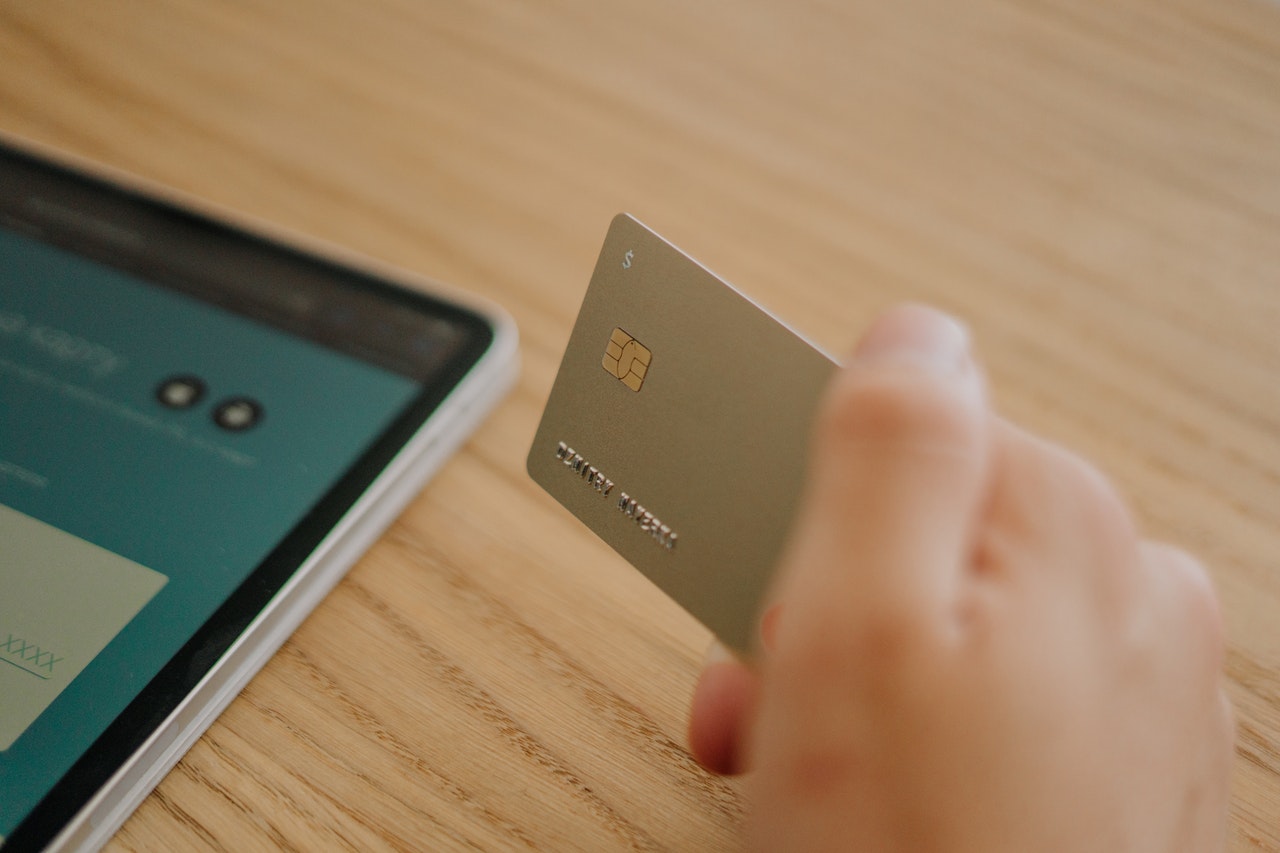
What Is Credit Card Processing?
Credit card processing allows businesses to accept payments via credit or debit cards. The process involves the transmission of the customers’ credit card data to approve digital transactions from the customers’ accounts to the merchant’s account. This process incorporates Point of Sale (POS) Hardware and Software that work in conjunction with a credit card processing company’s payment network. Often, your merchant account will be charged with a small percentage rate of each sale, and a per-transaction fee which varies depending on the type of transaction. You also have the option, in most cases, to set up a payment gateway to accept your customers’ debit and credit cards online. If you aren’t aware of the term, a payment gateway is a secure, encrypted channel where your customers can send payments without any associated risk. This term includes both the physical card-reading devices as well as the online payment processing portals.
It’s important to note, however, that accepting money from a credit card that is not physically present, whether it be via gateway or phone, comes with associated risk. As such, you’ll likely be charged a much higher rate.
What Is a High-Risk Merchant Account?
A high-risk merchant account belongs to businesses with an extensive history of late bill payment, refunds, and chargebacks. Because these issues are primarily associated with certain industries like online gambling or adult websites, your credit history does not factor into it; given that you’re running such a business. Being in the botanical herb industry such as CBD or Kratom directly puts you in the high-risk category because this line of business poses a threat to financial institutions. Moreover, in this case, it doesn’t matter if your credit history is flawless or you’re just starting out, risk is ingrained into this industry.
Only a company with a great credit history that offers products and services with very low chargeback and refund rates qualifies for a standard merchant account. To get a good idea of what is deemed high risk, here is a list of industries that credit card processing companies have categorized as such:
- Antiquities
- Debt collectors
- Adult entertainment
- Pharmaceuticals
- Travel
- Law firms
- Life coaching
- Consumer electronics
- Telemarketing
- Calling cards
- Online gaming
- Gambling
- Affiliate marketers
Aside from operating in a high-risk industry, the following are some of the reasons your merchant account could be put in the same category:
- High Rate of Chargebacks: Most banks allow a chargeback ratio of under 1%. If your merchant account experiences a chargeback rate equal to or greater than this ratio, then you will be put in the high-risk category. The bank or your Third-Party Provider (TPP) typically issues multiple warnings and, if the situation persists, converts your account automatically to high-risk.
- Bad or Limited Credit History: If your credit history is questionable; late bill payments, missed bills, or being in debt; you will be deemed a high-risk merchant. This also happens if your credit history is very limited such as when you’re just starting out.
- High Sales Volume: Typically, if your monthly sales volume exceeds $20,000, then you will likely be put in the high-risk category. The rule of thumb is; the higher the credit card processing sales volume, the greater the associated risk of not being able to pay chargebacks and/or fines.
- Increased Transaction Rate: If your average transaction rate is $500 or higher, then you will be offered a high-risk credit card processing account.
- Country of Operation: Some countries tend to have a very high chargeback risk as a whole. If your company does business with and/or operates in these countries, then you will be put in the high-risk category. Aside from the US, safe options with low chargeback risk are the EU, Japan, Canada, and Singapore. It is important to note, however, that chargeback statistics can vary significantly with each passing year.
- Subscription Businesses: If your business runs on subscriptions, it will be classified as high-risk because your clients have the option to unsubscribe at any given moment; thus, leading to higher chargebacks.
What Is the Impact of Being High-Risk?
Risk is a key factor when dealing with the credit card processing industry. A high-risk merchant account carries much higher fees with additional charges to cover any damages. It also has a much longer list of terms and conditions as compared to the credit card processor’s low-risk clients. These terms and conditions can vary considerably from one provider to the next.
If you’re running a high-risk business, the following areas are likely to be affected:
Fees
As a high-risk merchant, your account will be subjected to considerably higher charges than a standard merchant account. These charges include the heightened costs of setting up, chargebacks, payment gateway, as well as monthly and annual fees. Every aspect of a high-risk merchant account is likely to have elevated costs and could potentially devour all of your profit margins. So, it’s advisable to browse through several different options and look for transparency in your payment providers and processors.
Rolling Reserve
A rolling reserve is a means of protection that a bank enforces on your account to cover the extreme cases of excessive chargebacks and refunds. This reserve model involves holding back a portion of your daily transactions for a period of six months, and then releasing them back to you on the seventh month, and so on. This amount serves as a guarantee so that if your business fails, or a major change adversely impacts it, the bank can cover its costs. In most cases, credit card processors hold roughly 10 to 15% of your transactions.
Minimum Reserve
A minimum reserve is a goal amount that has to be reached either by depositing in one lump sum or having a percentage of transactions cut over a period of time. You need to keep this amount in your balance as directed by your credit card processor.
Conclusion
As a high-risk merchant, you are much likely to have a lot on your plate right from the start. As such, it is pivotal for you to familiarize yourself with the best services out there to make your journey a little bit easier.